Speak and Act
The church communion actively participates in world affairs, promotes peace and justice, and sees itself called to serve people in need. In terms of "Speaking", it publishes Statements and is member at the Council of Europe. In terms of "Acting" it supports several welfare projects.
Statements
CPCE formulates statements and declarations relevant to current social-ethical and European political topics, and to various days of remembrance, that may be used by all of its member churches, often to wide reception and resonance.
You can download the statements on our website.
1700 Years Since the Conference of Nicaea (2025)
In 2025, the 1700th anniversary of the Council of Nicaea has been celebrated in many places in the form of academic conferences and church commemorative events. We, as the Communion of Protestant Churches in Europe (CPCE), would also like to join in the general celebrations, because we owe a great deal to the Council and its decisions. For us today, the significance of the Council lies primarily in three areas: the doctrinal confession of faith by the Council, the role of political power in church maƩers, and the establishment of a common date for Easter.
The CPCE at the Council of Europe
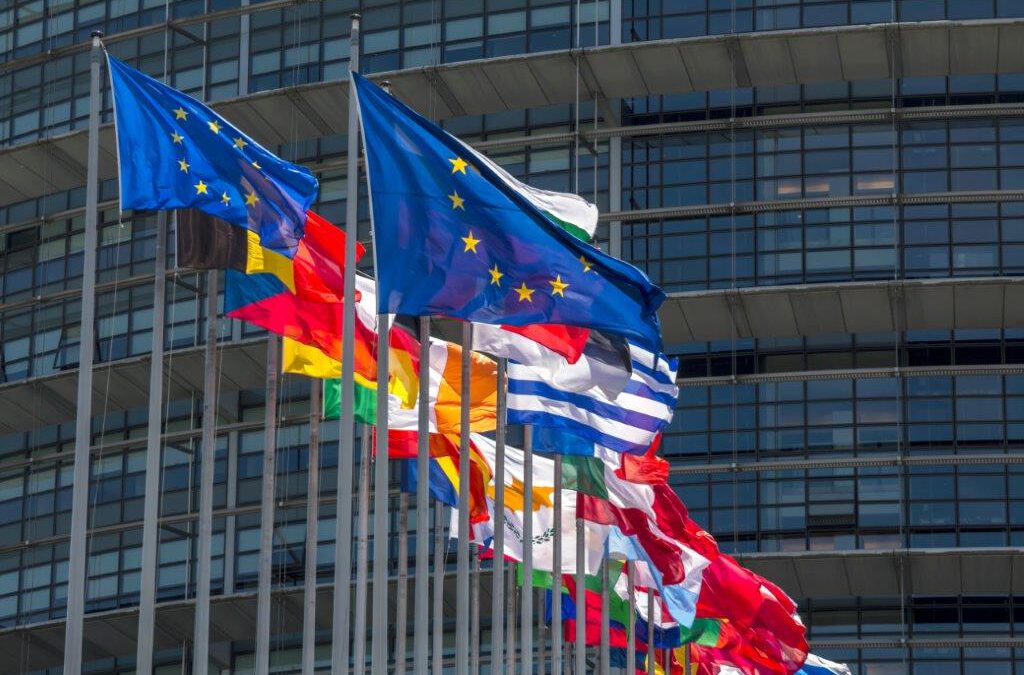
The Council of Europe stands for a Europe of values. Its main task is to foster democracy, the rule of law, and human rights in Europe. The organization is composed of 46 Member States and has its headquarters in Strasbourg, France.
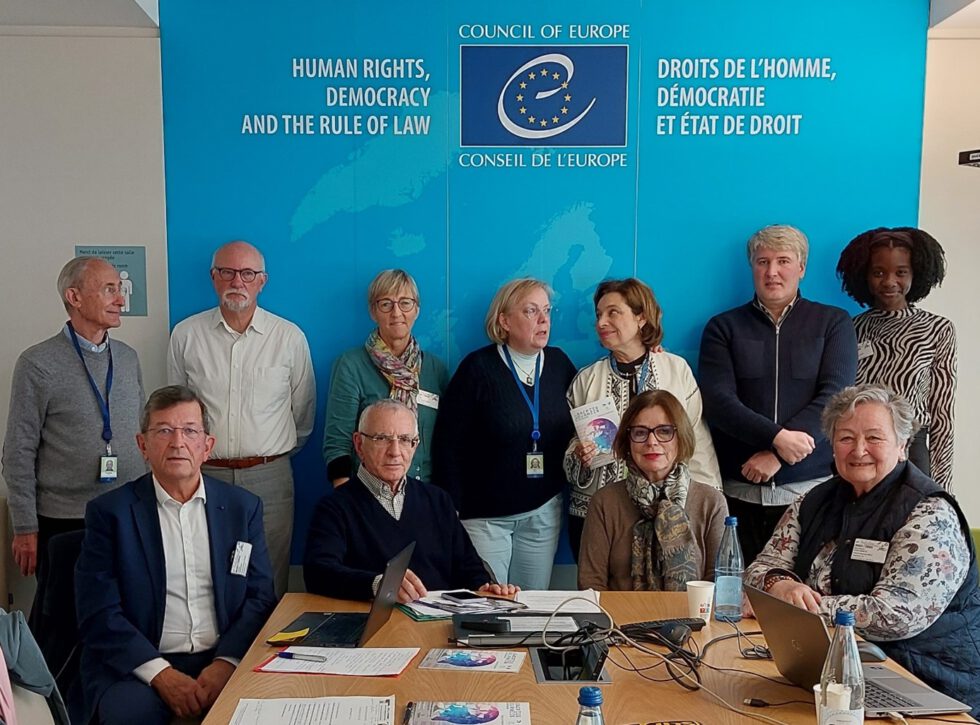
Since 2023, the Communion of Protestant Churches in Europe has been registered as an International Non-Governmental Organization (INGO) with participatory status in the CoE. As such, CPCE is part of the Conference of INGOs, is a member of the Committee for Interreligious and Interconvictional Dialogue - which stands for the religious freedom and peaceful coexistence within democratic society, and takes charge of different processes of the CoE that are closely connected with the Protestant churches in Europe.
The work of the CPCE in the CoE is put into practice through the Conference of Churches on the Rhein (KKR). This is one of the regional groups of the CPCE. They have an office in Strasbourg and the KKR's General Secretary is responsible for representing the Protestant churches in the CoE.
Social welfare projects
With funds from the Italian cultural tax (Otto per Mille) of the Evangelical Waldensian Church, the CPCE supports exemplary church projects in several European countries and abroad. The projects are carried out in cooperation with the Gustav Adolf Werk.
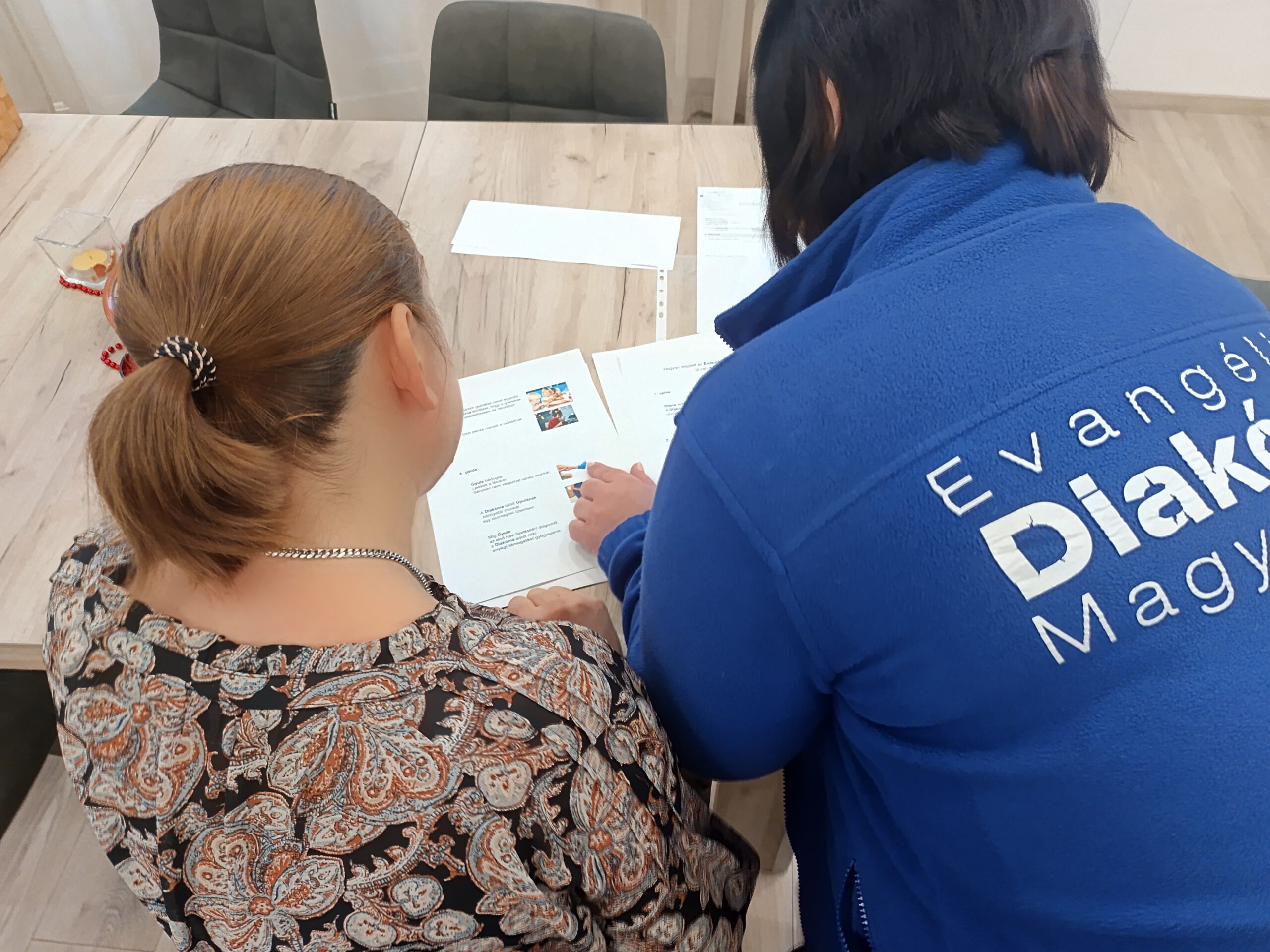
HUNGARY: When work ist not enough - Support for Refugees
Refugees in Hungary often live under precarious conditions. Many come from Ukraine, while others have fled crisis regions such as the Middle East or Africa. Despite being employed, especially women, single parents, and families with young children are at risk of homelessness due to low wages and high rents. Government support is very limited.
The Evangelical Diakonie in Hungary addresses this situation through an integration project that is financed by the CPCE. It provides temporary housing, emergency assistance for basic needs such as food, medication, and rent, as well as integration counseling. The goal is to prevent homelessness and sustainably improve refugees’ living conditions.
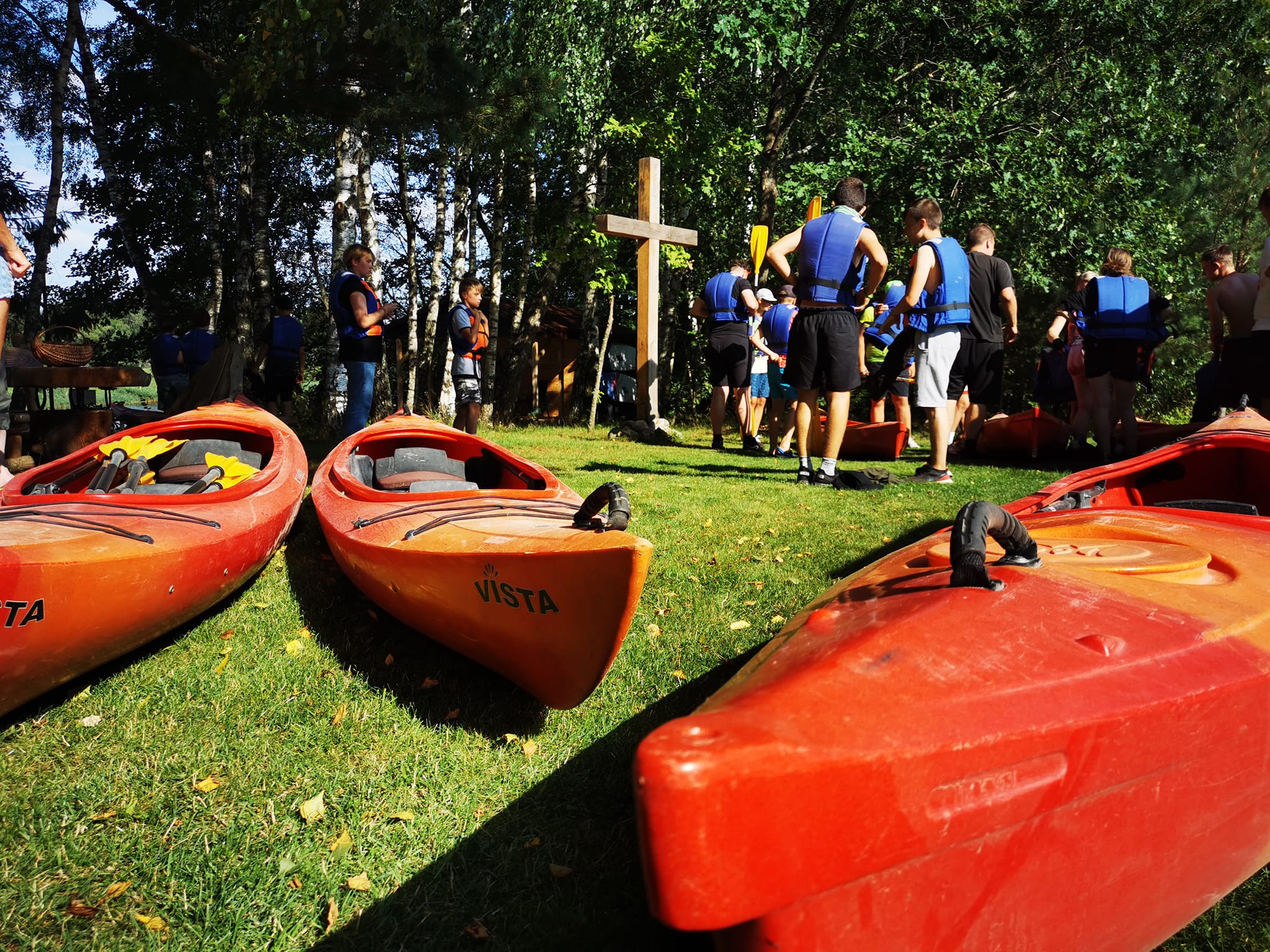
LITHUANIA: Day centers for children in rural areas
Labor migration continues to shape Lithuania, especially in rural regions. Many children grow up in poverty, often separated from one or both parents, facing emotional stress and limited access to education and social participation.
We support four diaconal day centers that offer reliable after-school care, educational support, recreational activities, and regular meals. These services are complemented by psychosocial and creative programs. The project aims to sustainably strengthen children’s stability, development, and social inclusion.
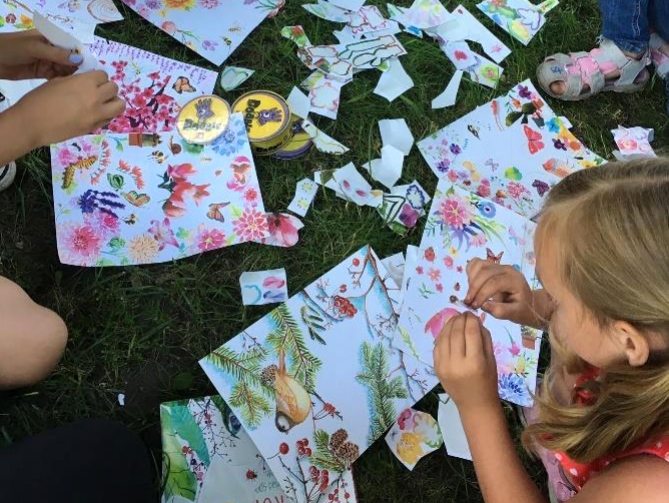
POLAND: Strengthening children and families with psychosocial support
Katowice and Bytom have been deeply affected by deindustrialization, leading to poverty, social insecurity, and strained family environments. Many children grow up facing neglect, violence, addiction, or long-term separation from parents working abroad, which increases emotional stress and developmental risks.
In cooperation with Diakonie Poland, the foundation Jesteśmy dla Was provides accessible, ongoing psychosocial support for children, young people, and families.
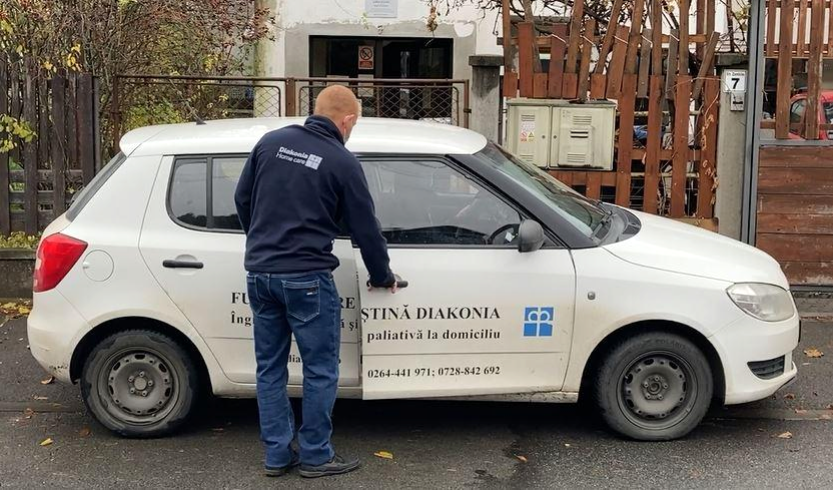
ROMANIA: Dignity in old age - Care services for elderly people
Nearly one in five people in Romania is over 65. Many elderly people live alone with chronic or terminal illnesses, while younger family members often work abroad. In rural areas, access to medical and social care is especially limited.
We support the home care service of Diakonia Cluj, which provides medical and palliative care tailored to individual needs, helping older people remain independent and reducing hospital stays. In addition, Diakonia Cluj operates two residential care homes for people with high care needs, reaching several hundred elderly people each year, mainly in rural regions.
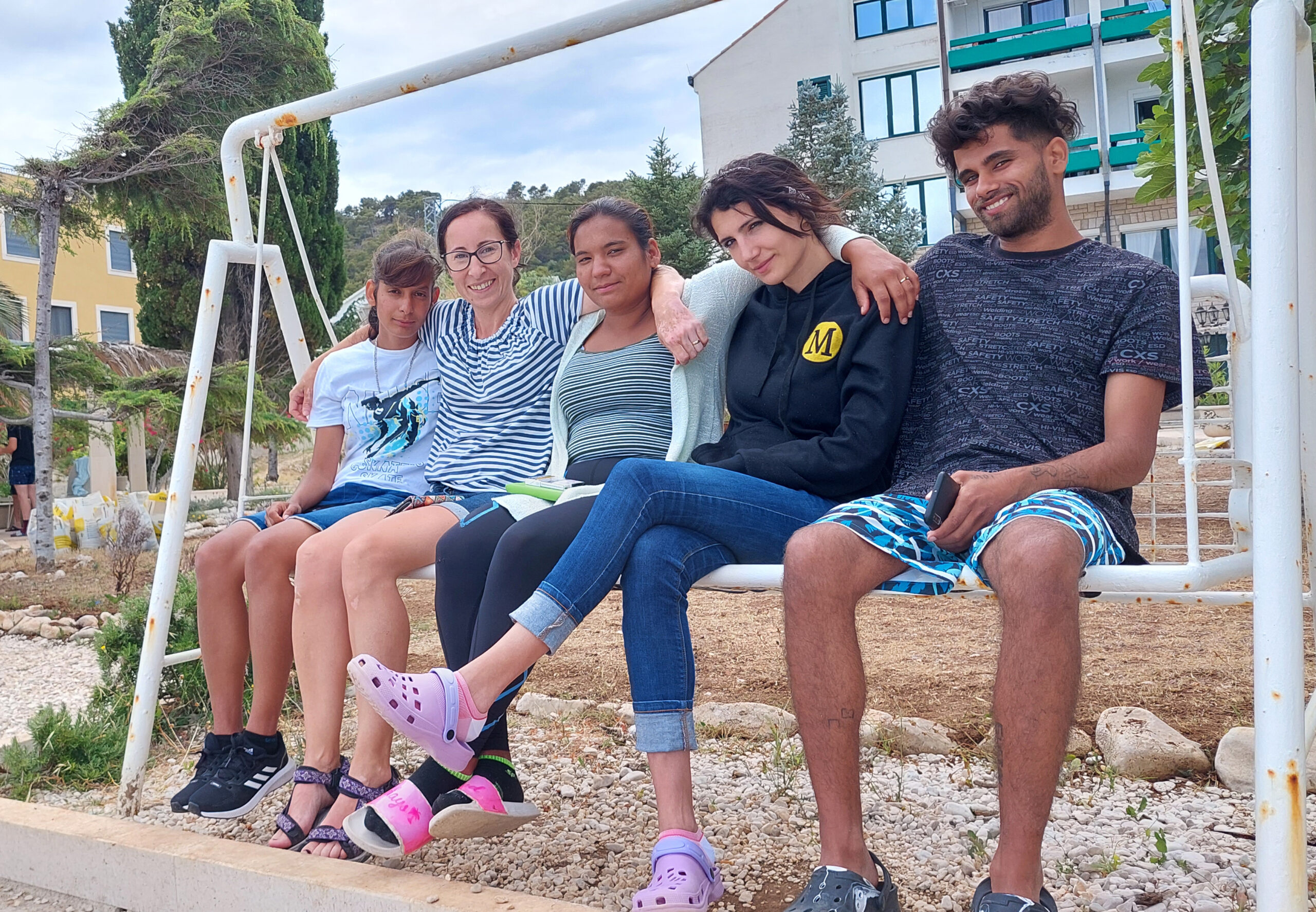
SLOVAKIA: Supporting young people leaving care
Young people who grow up in foster care or institutions often carry heavy burdens from loss, unstable relationships, and family breakdown. When support ends at adulthood, many lack the emotional, social, and practical skills needed for independent living, increasing the risk of isolation, homelessness, exploitation, or precarious work.
In Slovakia, we support a diaconal project that assists young people after they leave foster families or care institutions. It offers individualized development plans, psychological counseling and therapy, practical life support, and help with career pathways. Pastoral care provides additional guidance and orientation, helping stabilize lives and empower young people to take responsibility for their future.
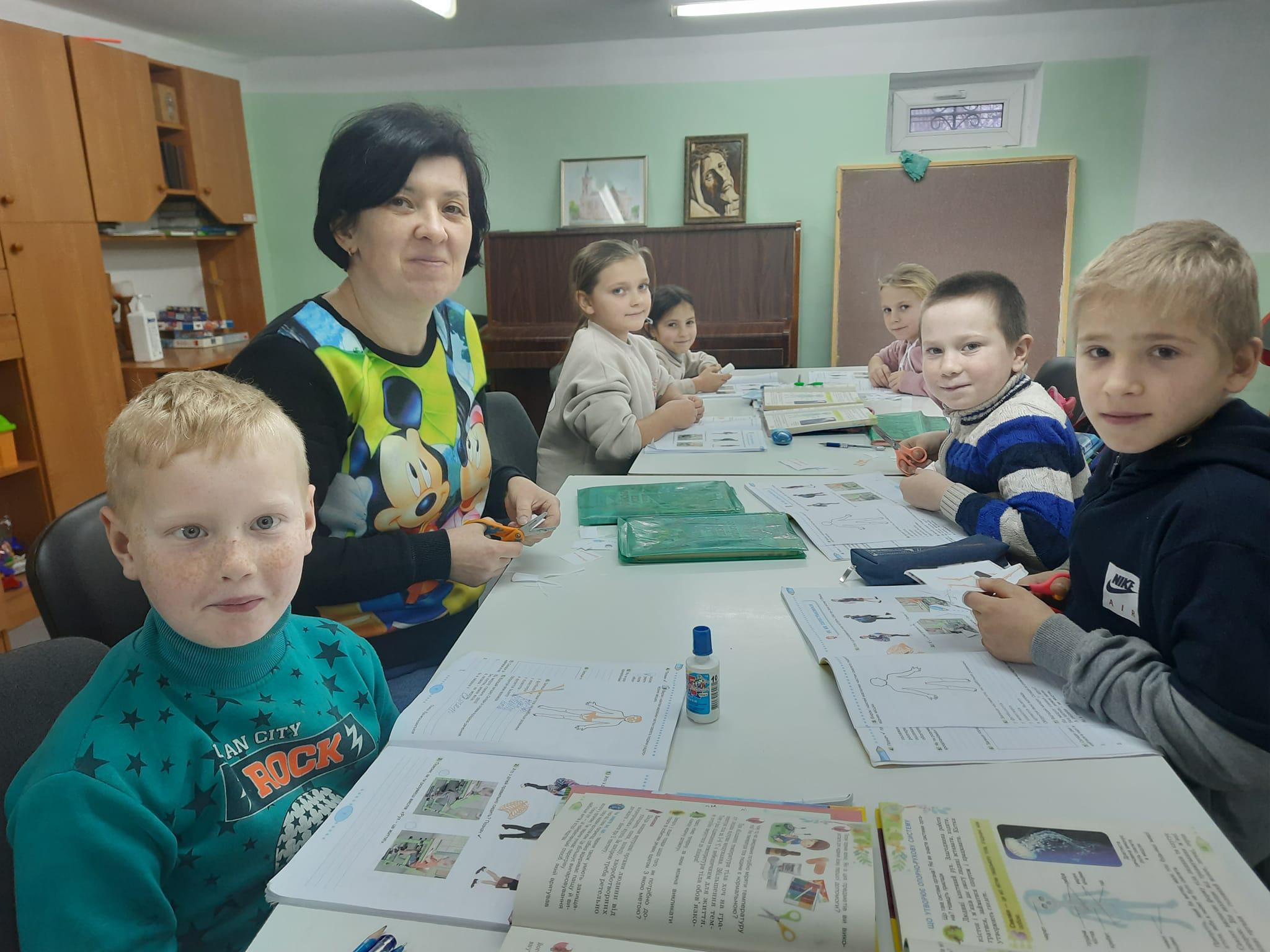
UKRAINE: Care in times of crisis: Children’s centers and community kitchen
The war in Ukraine places a heavy burden on children, families, and elderly or ill people. Many children struggle at school and socially, while older and sick people face isolation and limited access to basic care.
In the communities of Novogradkivka and Petrodolinske in the Odesa region, a local Protestant congregation provides targeted support. Two children’s centers offer educational assistance, daily care, recreational activities, and healthy meals for children. At the same time, a community kitchen supplies vulnerable adults with warm meals and freshly baked bread.
The project relieves hardship, strengthens community ties, and gives children a stable foundation for the future.
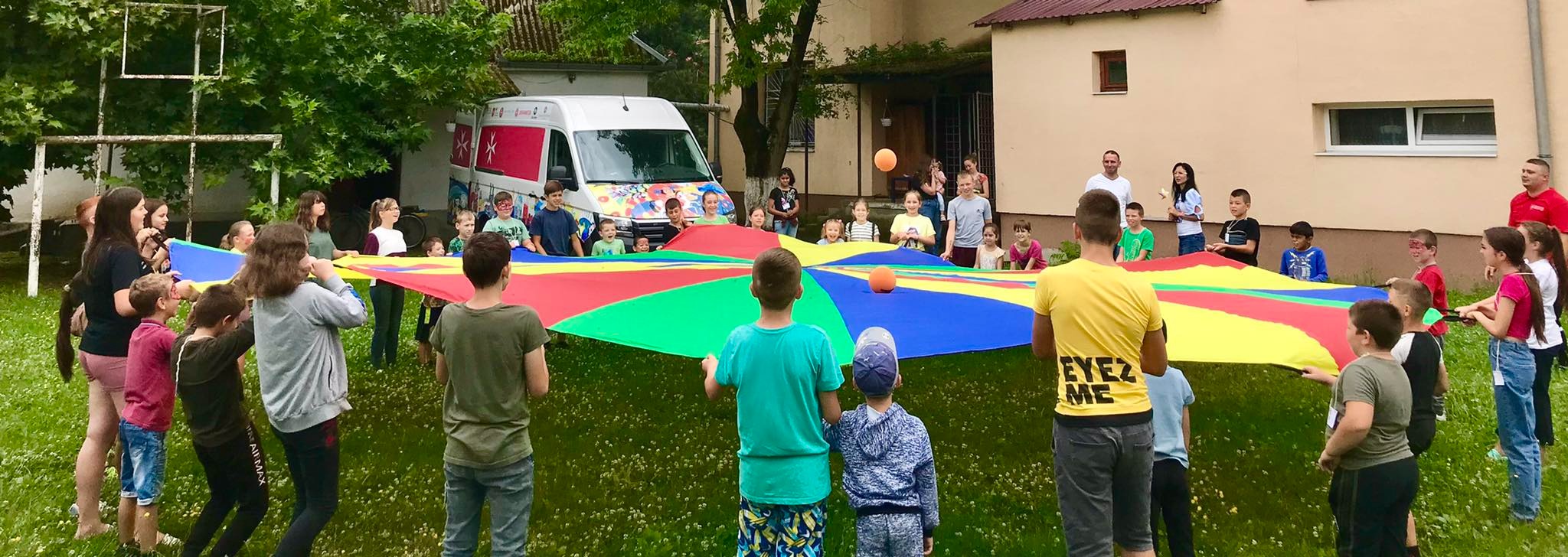
UKRAINE: Summer camps for children in war
War has deeply affected children and families in Transcarpathia. Many fathers and brothers are at the front, have fled, or have lost their lives, leaving mothers and grandmothers to carry daily responsibilities. Children grow up amid insecurity, loss, and hardship and urgently need safe spaces for support and joy.
We support summer camps run by the Reformed Church in Transcarpathia. These camps offer protected environments where children and young people can build friendships, experience community, and find moments of relief from the realities of war. Through shared activities, outings, and care, the camps provide rest, comfort, and renewed hope.
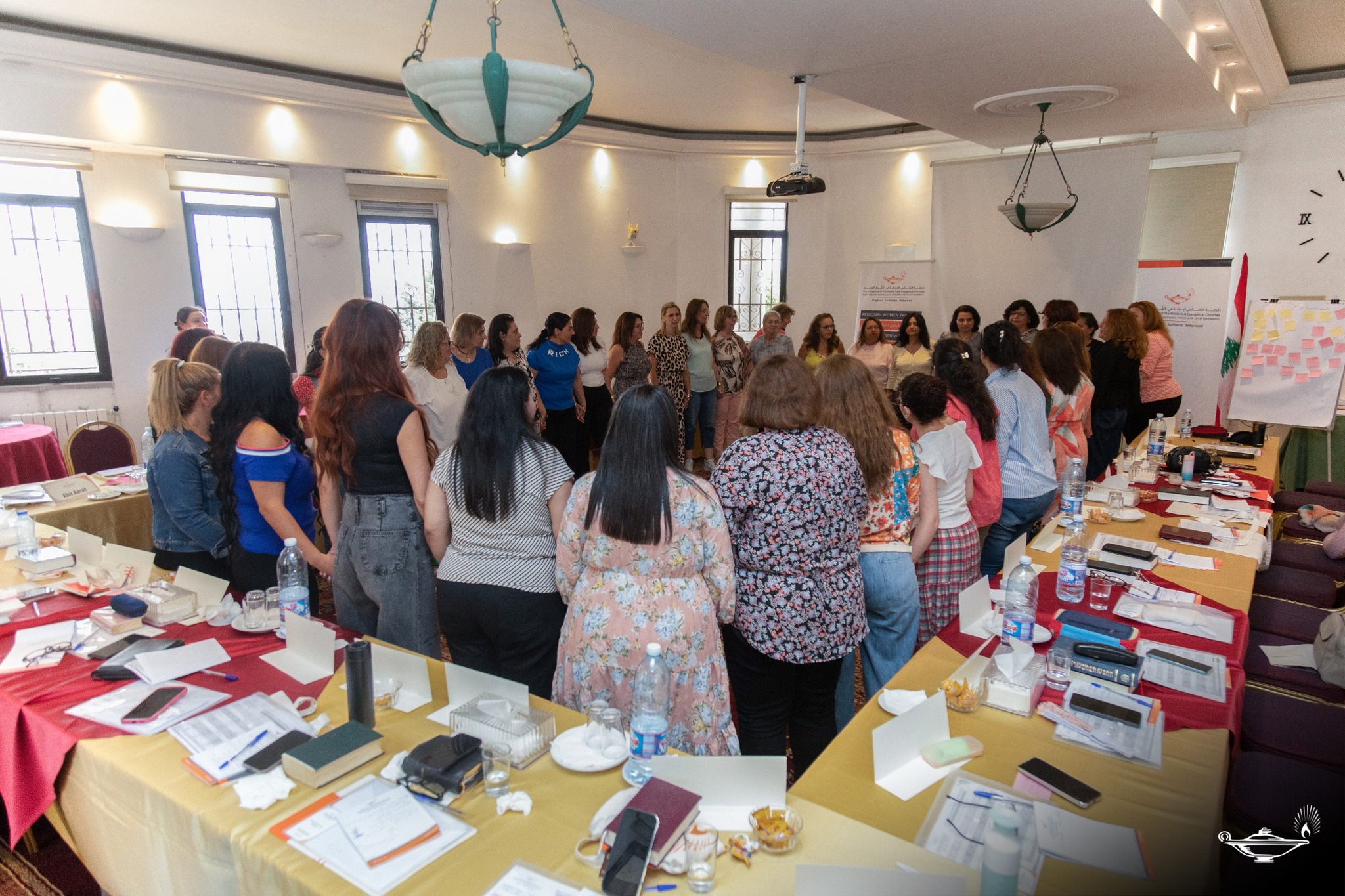
MIDDLE EAST: Prevention and Protection from Violence for women
Gender-based violence affects millions of women in the Middle East, often remaining hidden and insufficiently addressed. In summer 2025, the Fellowship of Middle East Evangelical Churches (FMEEC) held a seven-day training on gender-based violence in Lebanon. Women from evangelical churches across the region came together to be trained as multipliers.
The participants gained in-depth knowledge on forms, causes and the scope of gender-based violence, as well as on prevention, intervention and referral mechanisms in their respective countries. The training empowered women to take responsibility within their churches, raise awareness of violence and provide concrete support to those affected.
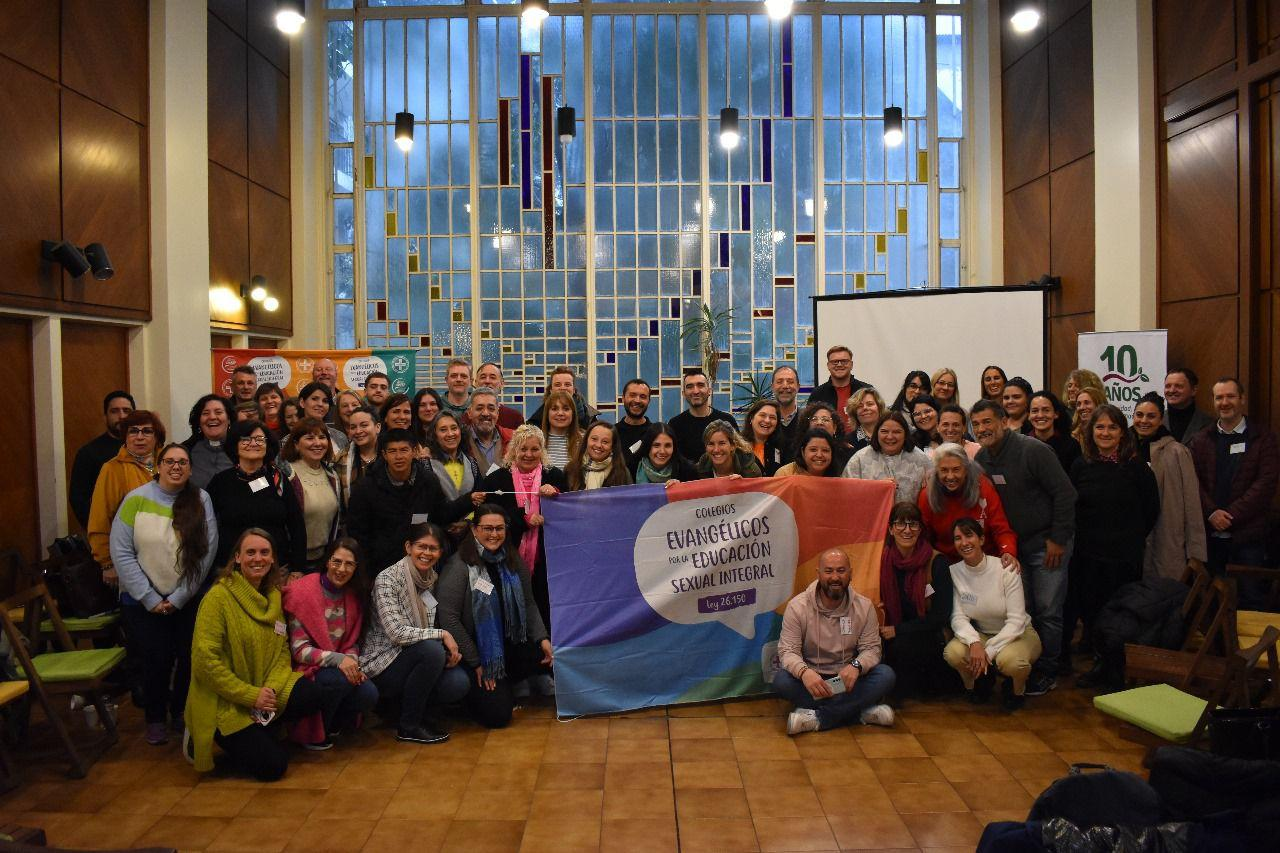
ARGENTINA: Violence Prevention - Support and Safe Spaces for Women and Girls
Gender-based violence is a daily reality for many women and girls in Argentina, often occurring within the home or close social environments and remaining largely hidden. In response, the Hora de Obrar Foundation has for years trained and sensitized professionals and teachers in community centers and schools.
Staff learn to identify violence, support those affected and take preventive action. Together, local networks are built to strengthen women, girls and families and to create safe spaces. This helps foster learning and living environments where children and young people can grow up safely and access education. We support the foundation’s project.
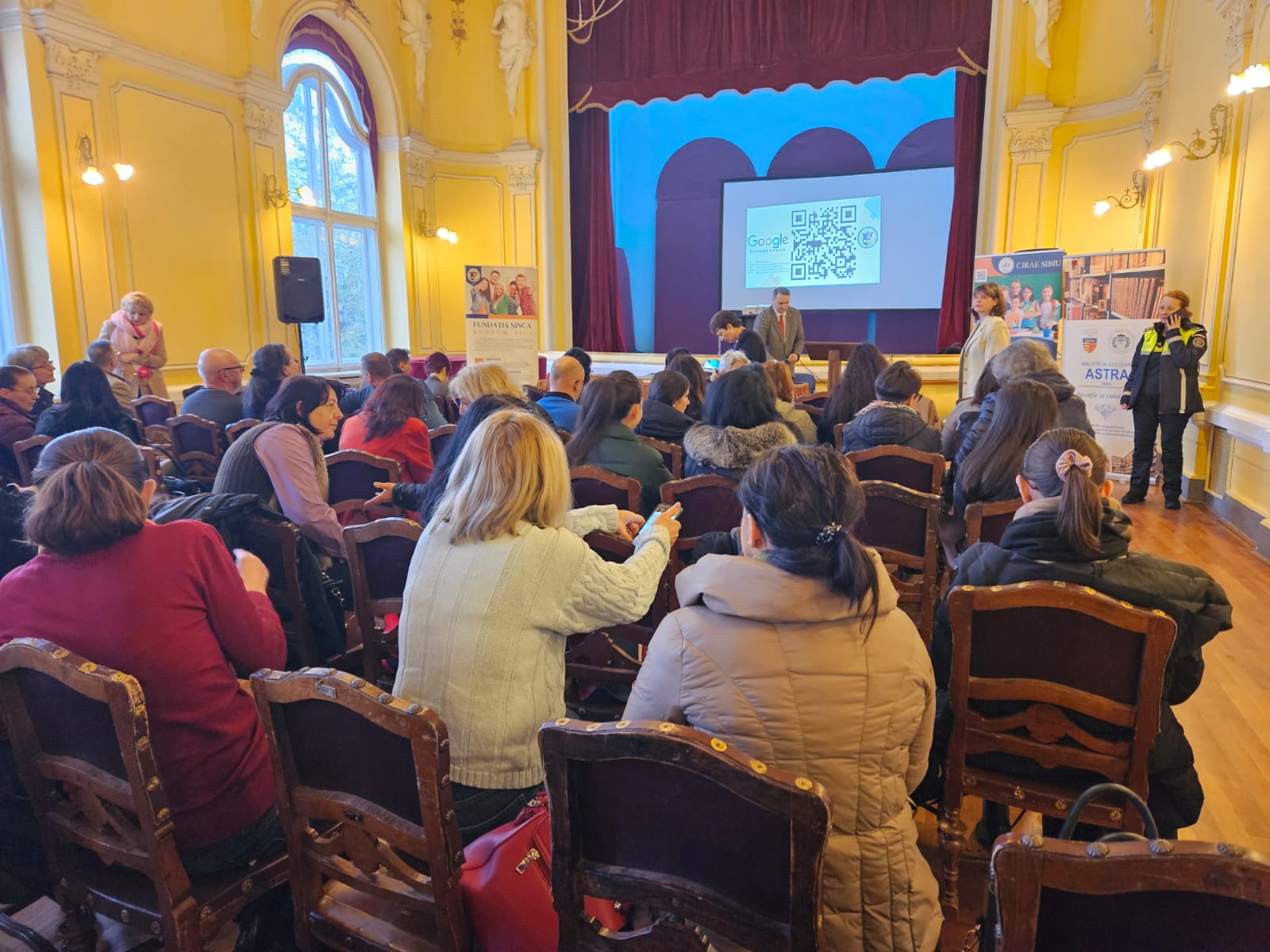
ROMANIA: Growing Up Safely: Preventing Human Trafficking
In Romania, children and adolescents face a high risk of becoming victims of human trafficking, including labor exploitation, forced begging, criminal exploitation and sexual exploitation. The anonymity of the internet and social media makes it easier for traffickers to target minors, significantly increasing the risk.
The Evangelical Church A.B. in Romania conducts prevention programs in schools. Students receive age-appropriate information, while teachers, school psychologists and parents are trained to recognize early warning signs and implement protective measures. Through these activities, the church strengthens protection structures, raises awareness and makes an important contribution to preventing human trafficking. We support this project.